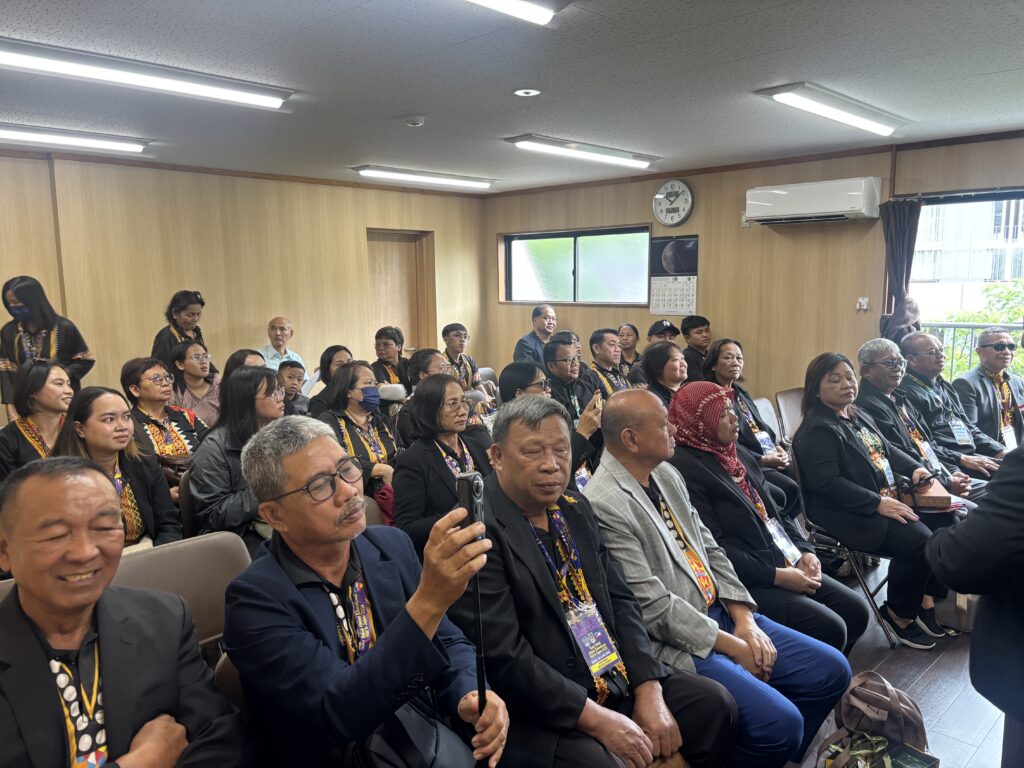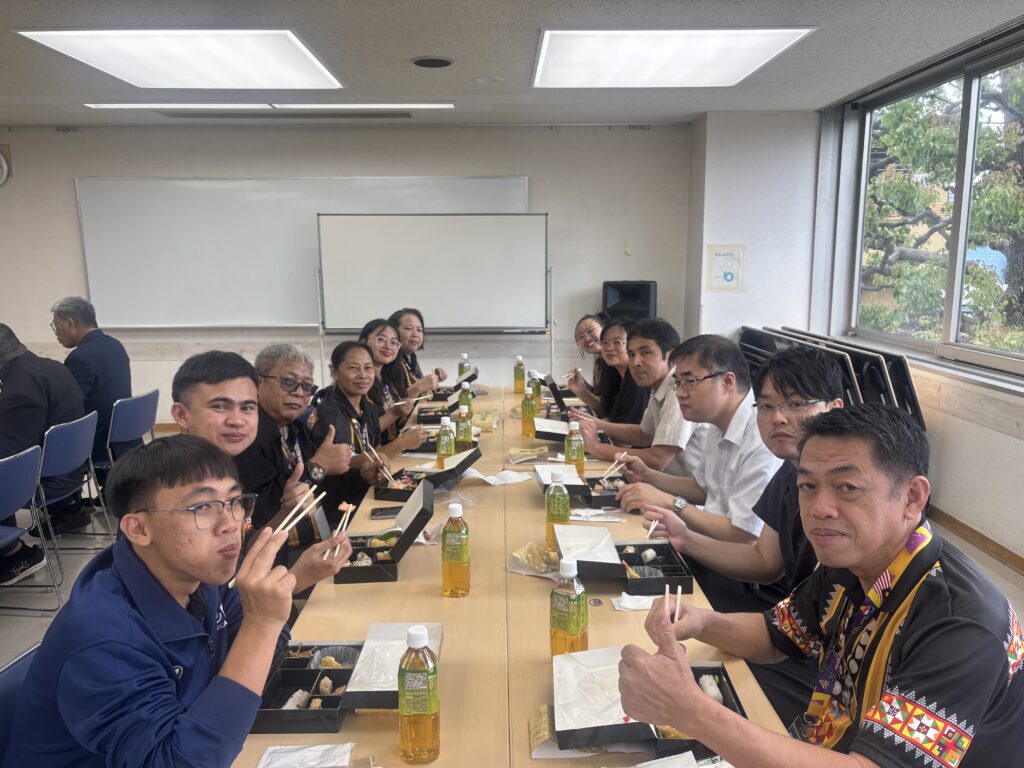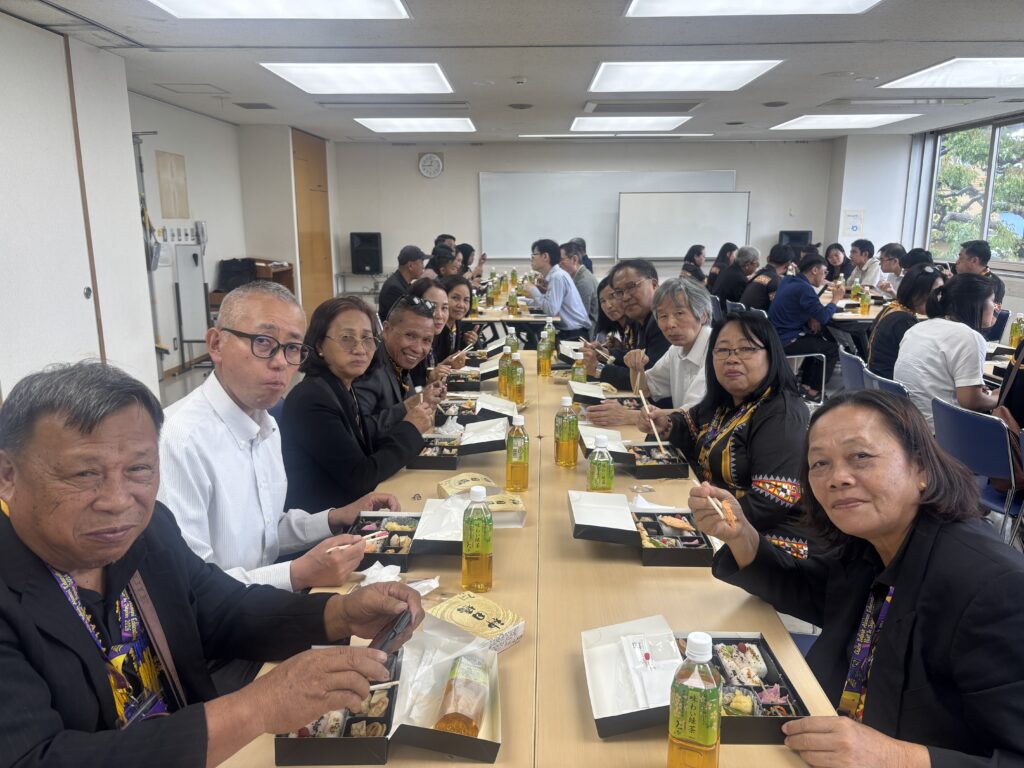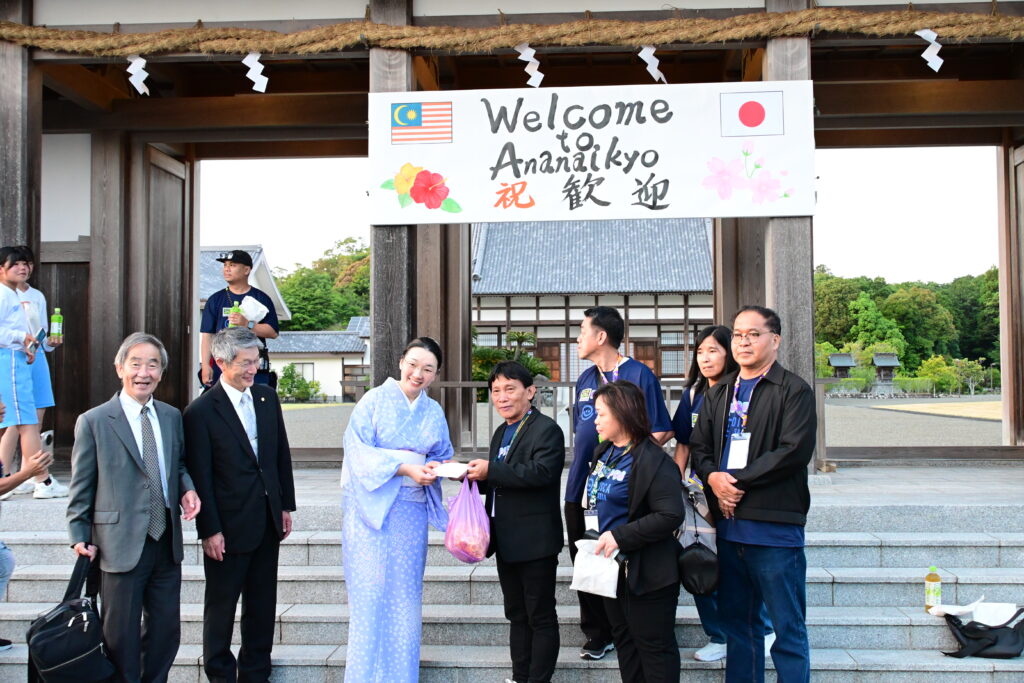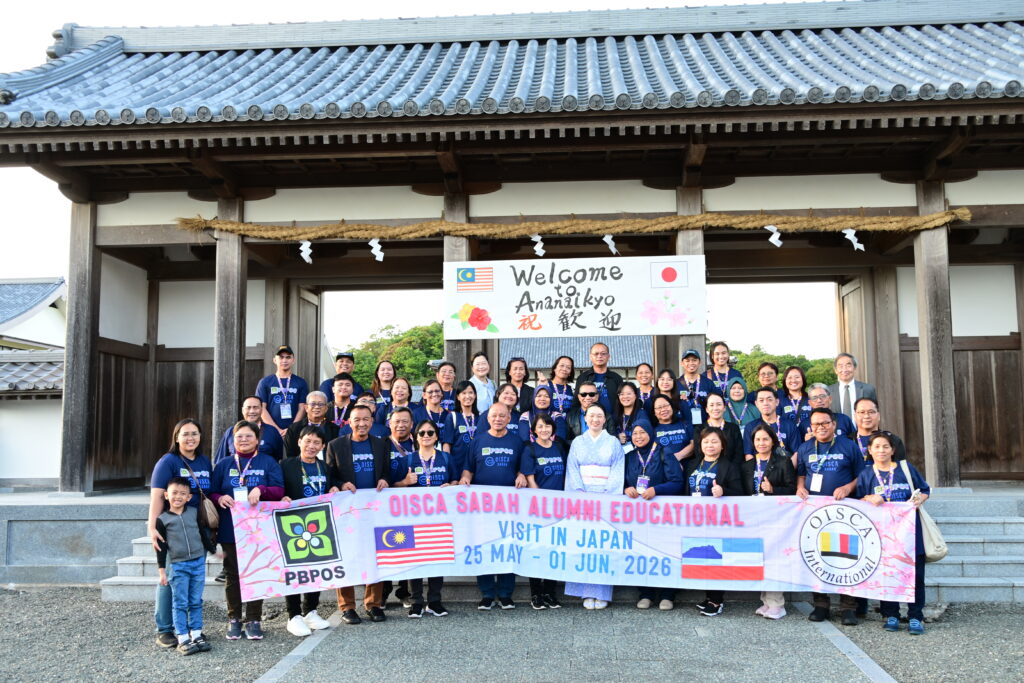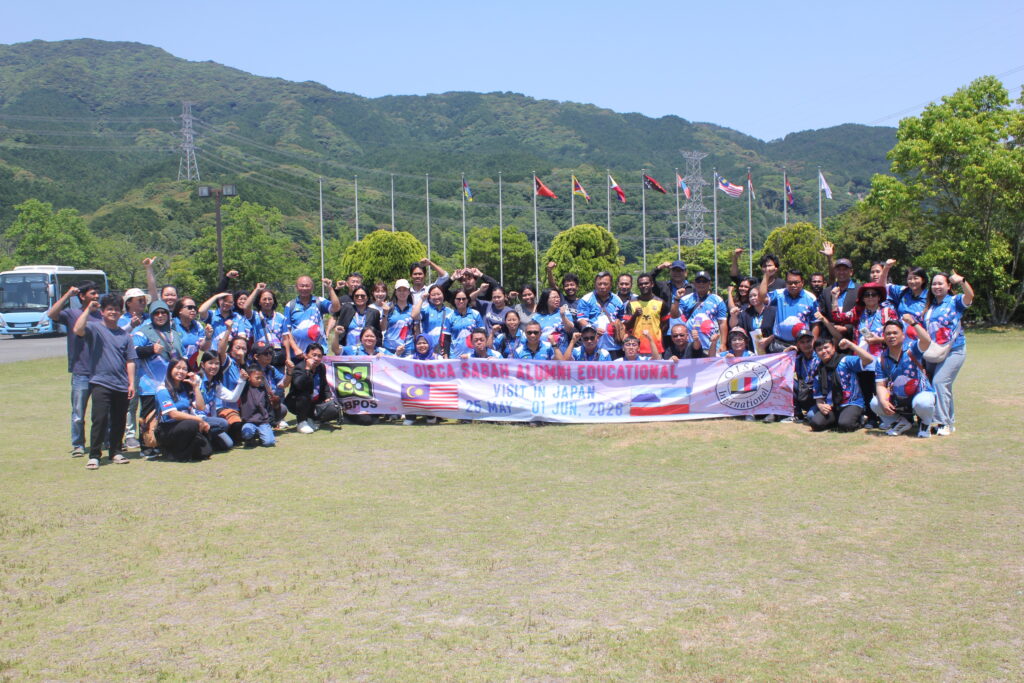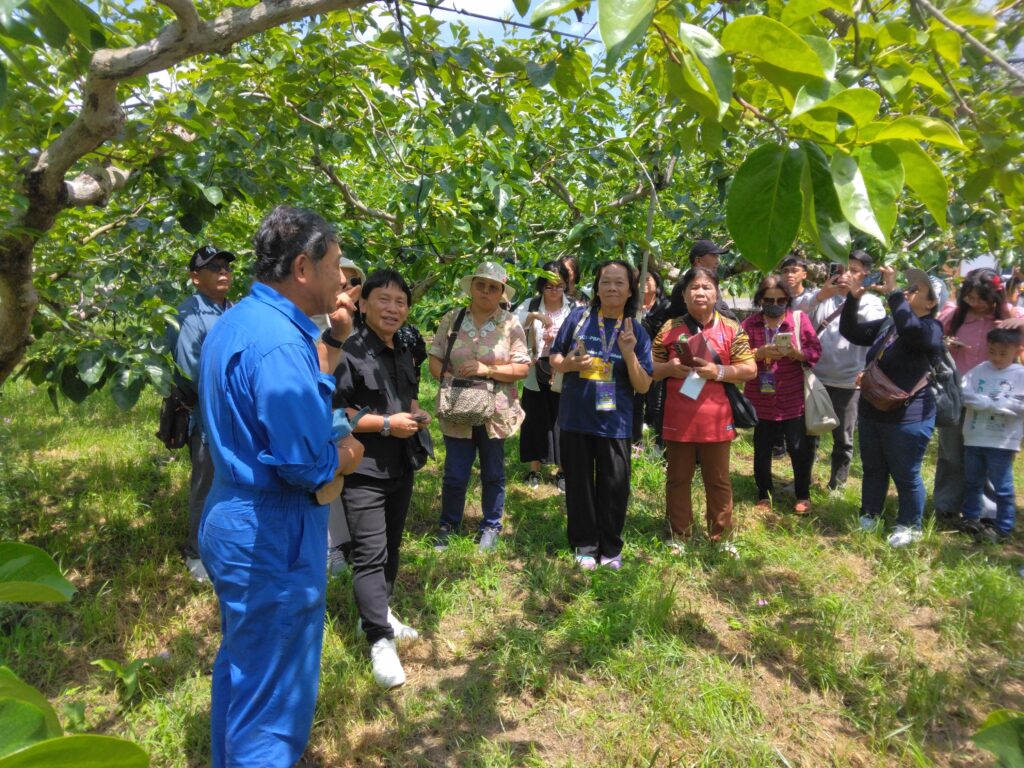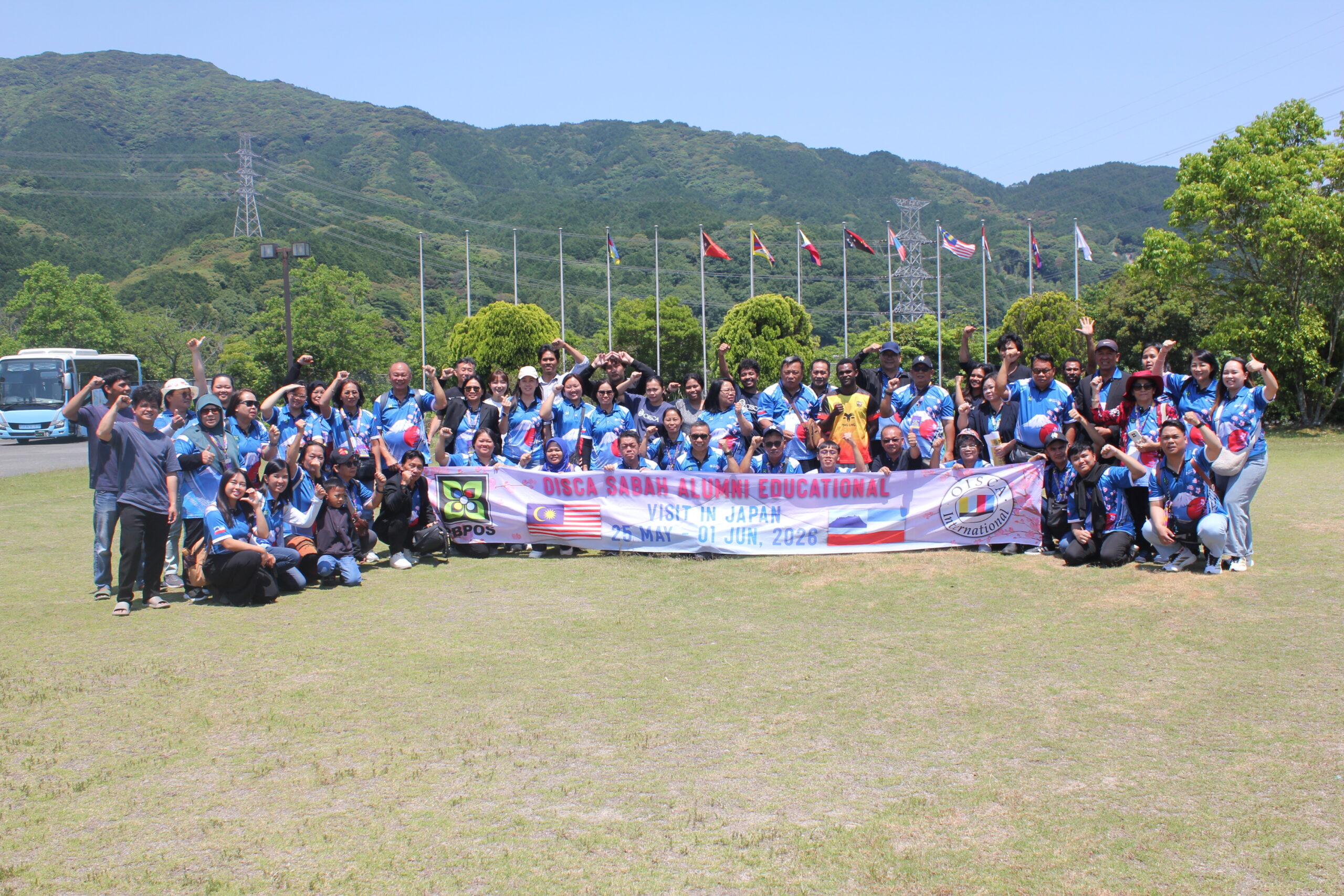
From May 25 to June 2, a 44-member study tour delegation of Sabah OISCA Trainees’ Association (PBPOS), Malaysia, came to visit Japan. The group comprised former OISCA trainees and their families.
During their stay in Japan, the group visited the OISCA headquarters in Tokyo, the Ananai-kyo religious organization’s headquarters in Kakegawa, Shizuoka Prefecture, and the OISCA Nishi Nippon Training Center in Fukuoka. In addition, the group also visited Mount Fuji, the Nagasaki Peace Memorial Museum, and other sites.
At the OISCA headquarters office in Tokyo, the PBPOS delegation conferred with Ms. Nakano Etsuko, President of OISCA International. President Nakano gave a comprehensive overview of OISCA’s history. OISCA was established by its founder Rev. Nakano Yonosuke, 65 years ago, in 1961. As a result of its defeat in World War II, Japan found itself in a state of extreme poverty. The Japanese people worked tirelessly and gradually achieved economic prosperity. The founder believed that while the increasing affluence of Japanese people was a positive development, he felt a sense of crisis regarding the gradual loss of Japan’s ancient traditional culture and spirit. He emphasized that spiritual richness is just as important as material prosperity.
In 1961, the “International Conference on Spiritual Culture” was held. Supporters flocked not only from neighboring Asian countries but also from the United States, Europe, South Africa, and elsewhere, bringing together 179 participants from 20 countries. It would have been a shame to let such an international conference end after just one gathering. Calls for the establishment of a permanent organization grew, and in October 1961, the second “International Conference on Spiritual Culture” was held in Atami City, Shizuoka Prefecture, leading to the founding of the “International Organization for Cultivating Human Spirit.” This later became OISCA International.
In 1966, a food crisis struck India. In response to an urgent request from India, OISCA dispatched 18 dedicated farmers from Japan to work together with local farmers to increase food production.
OISCA carries out activities to nurture young people in rural communities and also hosts trainees from Asian countries in Japan.
The “Children’s Forest” Program (CFP) began in 1991. Planting trees, growing vegetables, and securing food supplies are all important. Agriculture is of the utmost importance. We are now faced with the challenge of coping with the issue of global warming.
After the speech of the OISCA President, eight former male trainees and one former female trainee each gave a self-introduction. They spoke about their experiences living at the training center in Japan and their current occupations. They mentioned that their most memorable experiences were their homestays and interactions with Japanese instructors. They also added that the valuable experiences they gained at the training center included the Japanese work ethic:hard work, and punctuality.
Lastly, the PBPOS group presented President Nakano a plaque of appreciation and many souvenirs from Sabah and had a group photo session with the OISCA executive leaders.
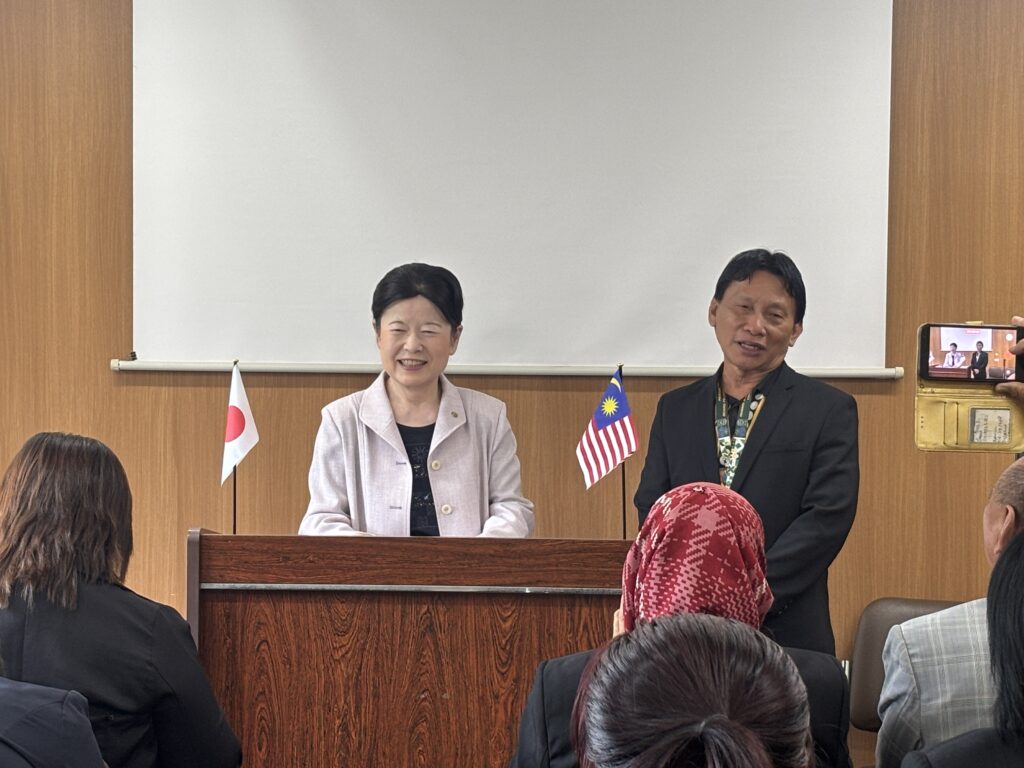
Mr. Johnny Bin Gilong, former trainee serving as an interpreter (the person on the right)