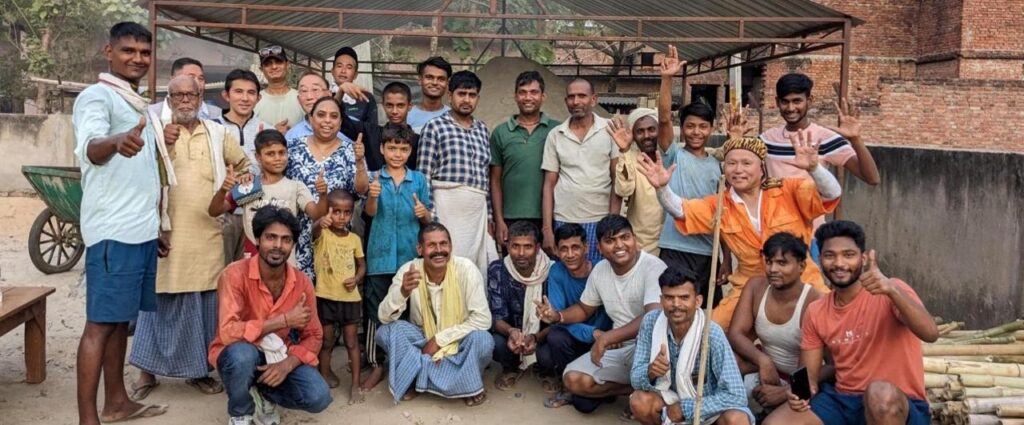
From March 17 through March 28, Mr. Akira Morita, Managing Director and Director of International Cooperation Division, together with three other OISCA staff members and two charcoal specialists, paid a working visit to three villages in Varanasi District, Uttar Pradesh State, India.
Since 2023, OISCA has been promoting the “Project to Support Sustainable Livelihood Improvement through Symbiotic Agricultural Technology in the Ganges River Basin Villages” with JICA’s grassroots technical cooperation project. This project aims to introduce and disseminate organic cultivation techniques utilizing bamboo charcoal.
This project is intended to enhance rural residents’ understanding of environmental conservation and the sustainable use of natural resources through the introduction of agricultural technologies utilizing bamboo charcoal and the cultivation of fruit trees and other crops, as well as the acquisition of related skills, which contribute to forest regeneration and conservation.
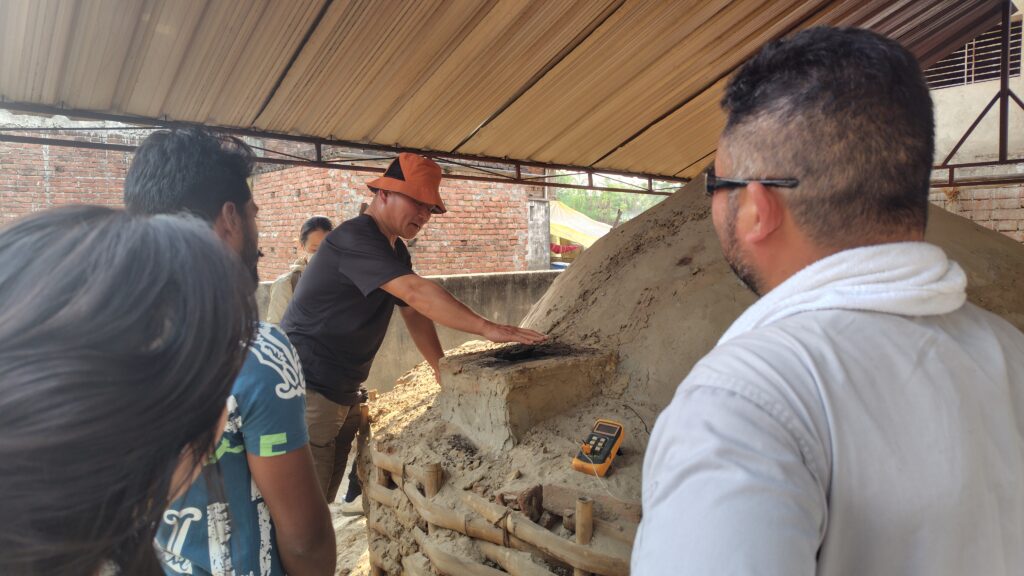
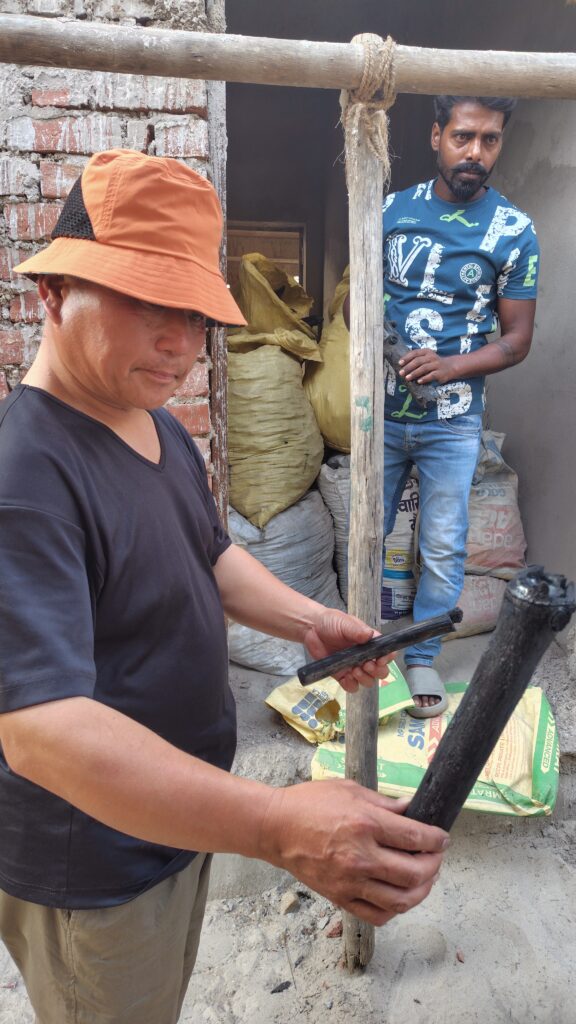
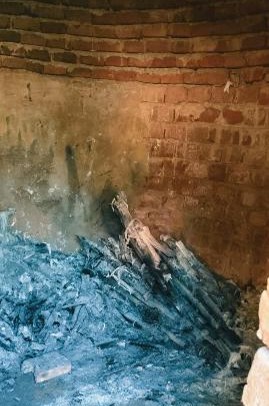
As a result of past efforts, kilns for making bamboo charcoal have already been completed in the three target villages, and coordinators (who are farmers) in each village are working with Japanese experts to produce bamboo charcoal. In addition, we have conducted tests to utilize the charcoal produced by 20 partner farmers.
During this visit, we provided guidance on managing charcoal kilns in each village, conducted follow-up interviews regarding the use of bamboo charcoal in the fields, and held a preparatory seminar for a study tour to Japan scheduled in the middle of June, which will be participated in by related farmers from India.
1.Ramna Village
This is the village where the first bamboo charcoal kiln was built as part of this project. It is located about a 40-minute drive south of downtown Varanasi along the Ganges River. With a population of approximately 30,000, 60% of the land is farmland (with little rice cultivation), and while there are some bamboo groves, there are virtually no forests.
Mr. Ashok, a coordinator in Ramna Village, reportedly tried his hand at making bamboo charcoal on his own after working with an expert. Upon seeing the results, Mr. Atsushi Chida, an expert, commented, “Good! Mr. Ashok is amazing !” While charcoal production is considered quite difficult—particularly in terms of controlling the kiln temperature—it seems Mr. Ashok is already mastering the process.
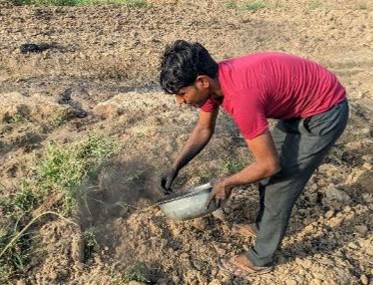
In this village, we visited about five farmers’ fields. The vast fields where various crops and fruit trees—such as wheat, tomatoes, onions, beans, and guavas—grow have a strangely soothing effect.
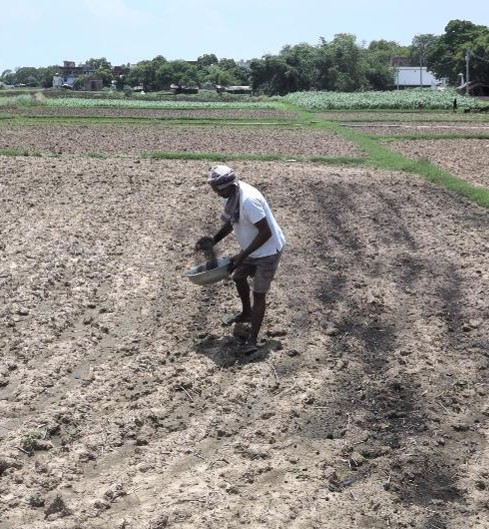
The bamboo charcoal tests were conducted in a way that allowed for a comparison of effectiveness between fields intended for personal consumption—rather than for commercial shipment—and fields used for livestock. From what we could see, the results were mixed: in some cases, the plants treated with charcoal seemed to be growing a bit more vigorously; in others, there was no noticeable difference at first glance; and in still others, the plants treated with charcoal actually appeared to be growing less well.
Although the trial has only just begun and no definitive results are available yet, we plan to continue experimenting—with the cooperation of local farmers—to find more effective ways to utilize bamboo charcoal, while also conducting land surveys.
2.Mustafabad Village and Chadpur Village
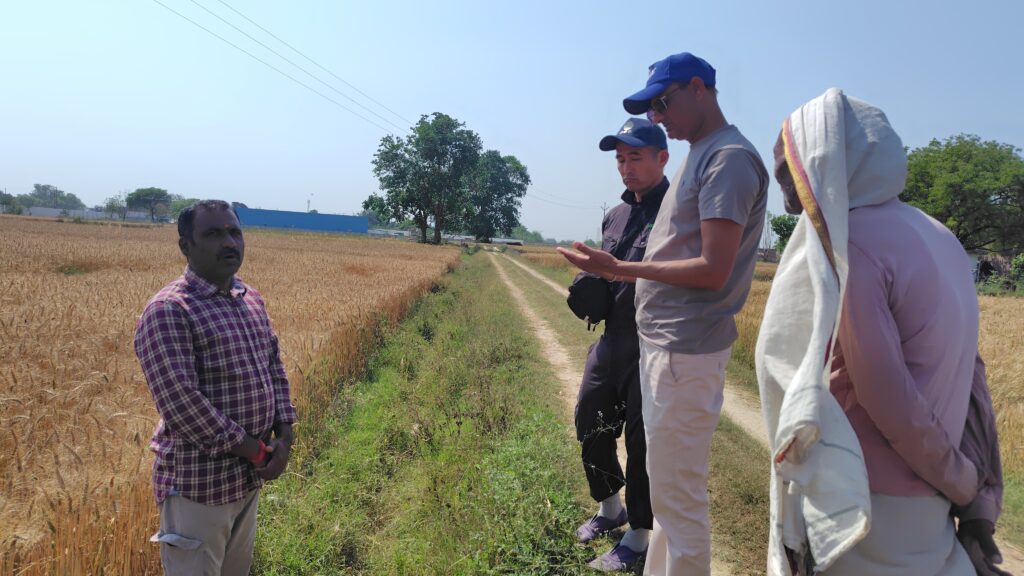
In these two villages as well, we spent a day visiting farmers’ fields and conducting interviews. The location is about a 40-minute drive from downtown Varanasi along the Ganges River. The two villages are located next to each other; Mustafabad Village has a population of about 13,000, while Chadpur Village has a population of about 6,000.
They say they grow rice here as well, but when we visited, the rice harvest seemed to be over, and wheat was growing instead. We’re also conducting tests with bamboo charcoal in that wheat field, and what was interesting was that, in one farmer’s field, the wheat on the side where bamboo charcoal had been spread was noticeably greener and taller overall compared to the side where it hadn’t been spread. The theory was that this was because the wheat was growing with plenty of nutrients and was about to reach harvest time after growing to a good height. It was surprising to see such a difference when the conditions were right.
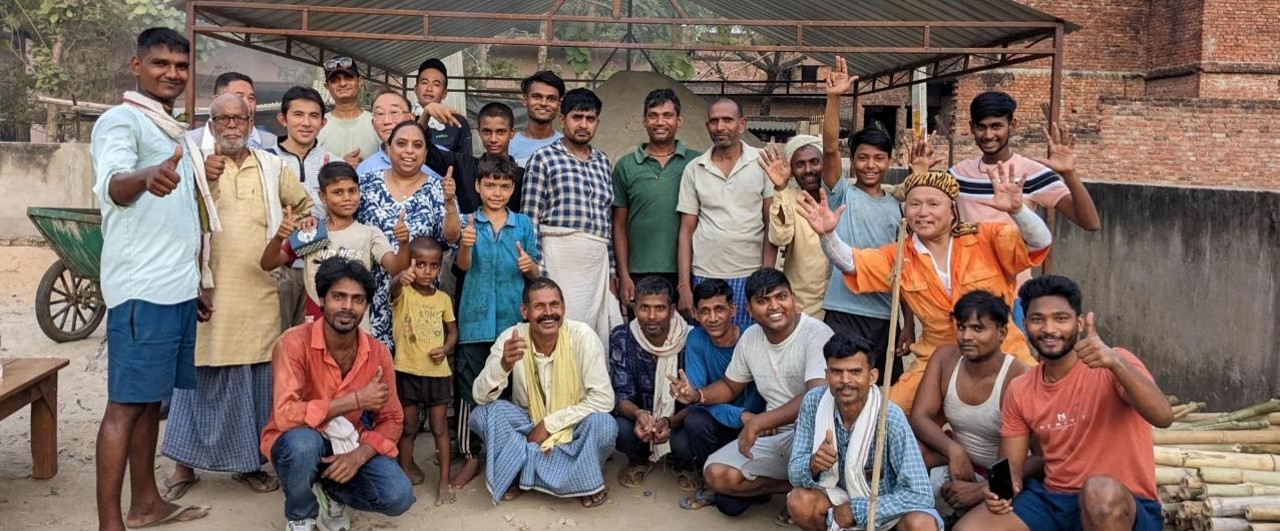
During this trip, we visited three villages and met with many farmers. Everyone showed great enthusiasm, and we felt that, together with the coordinators and local staff, we are gradually building a sense of trust as a team. A study tour to Japan for farmers from each village is scheduled in the middle of June, and we expect our activities to become even more active in the future.