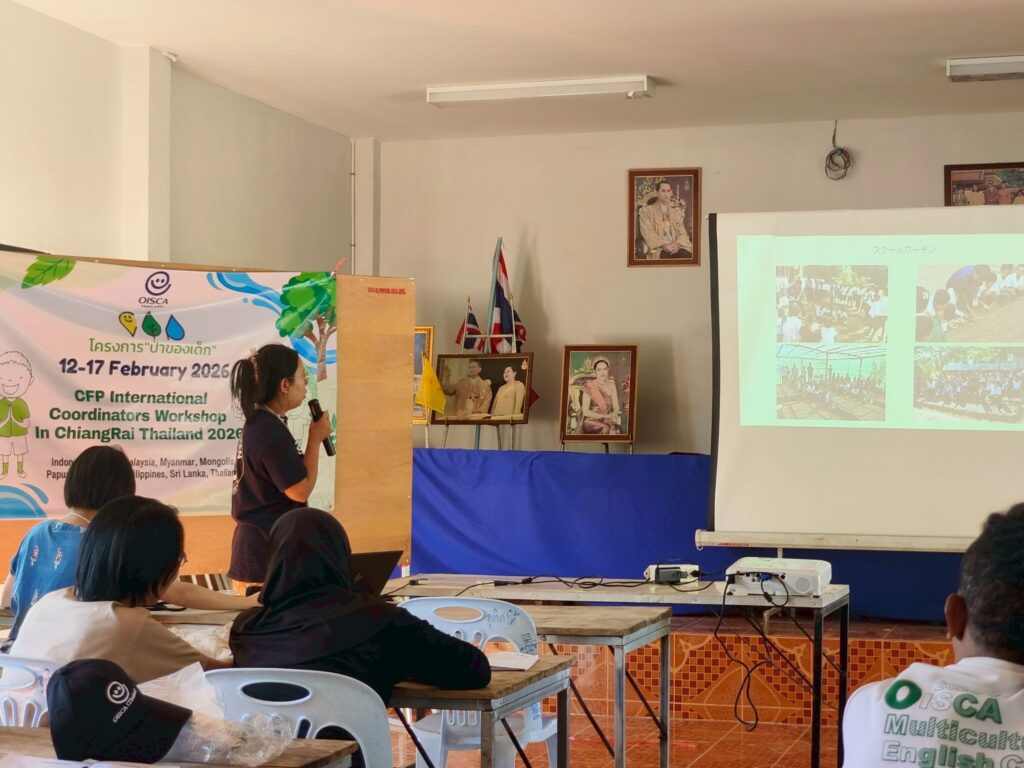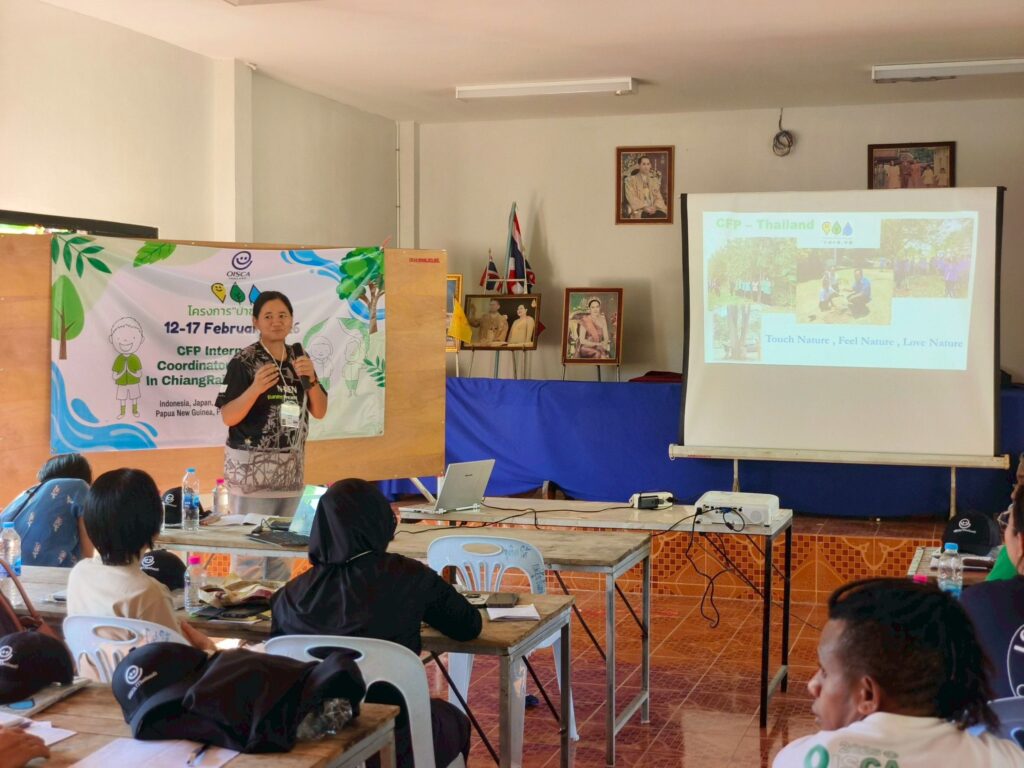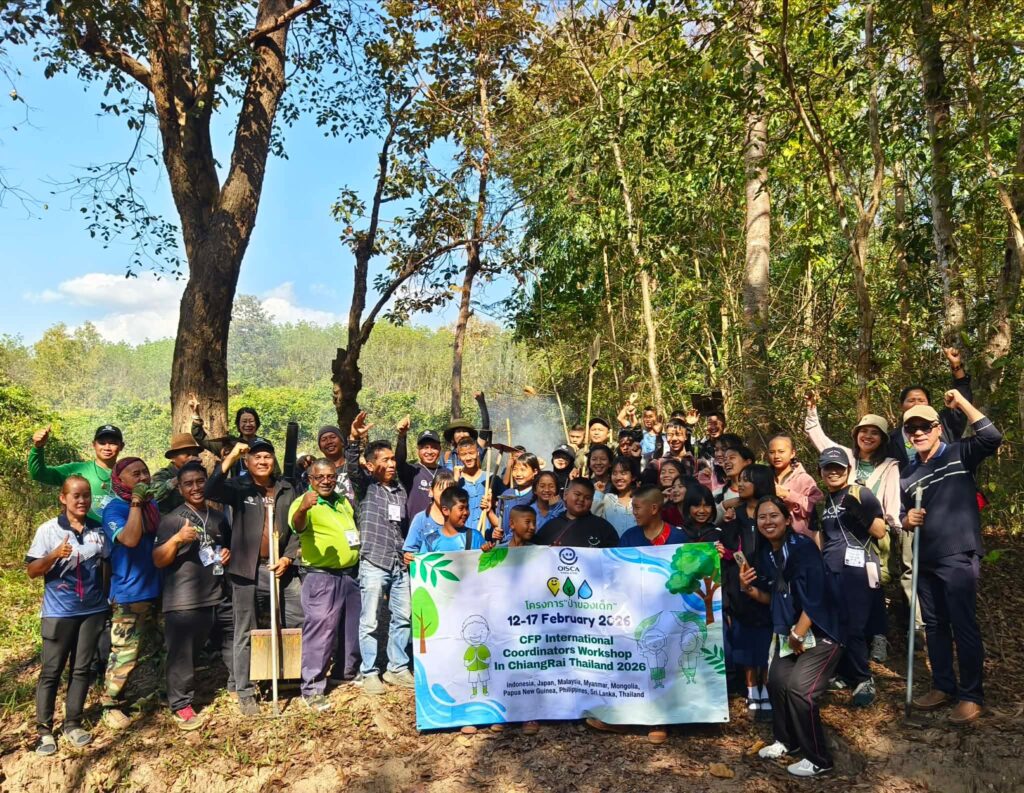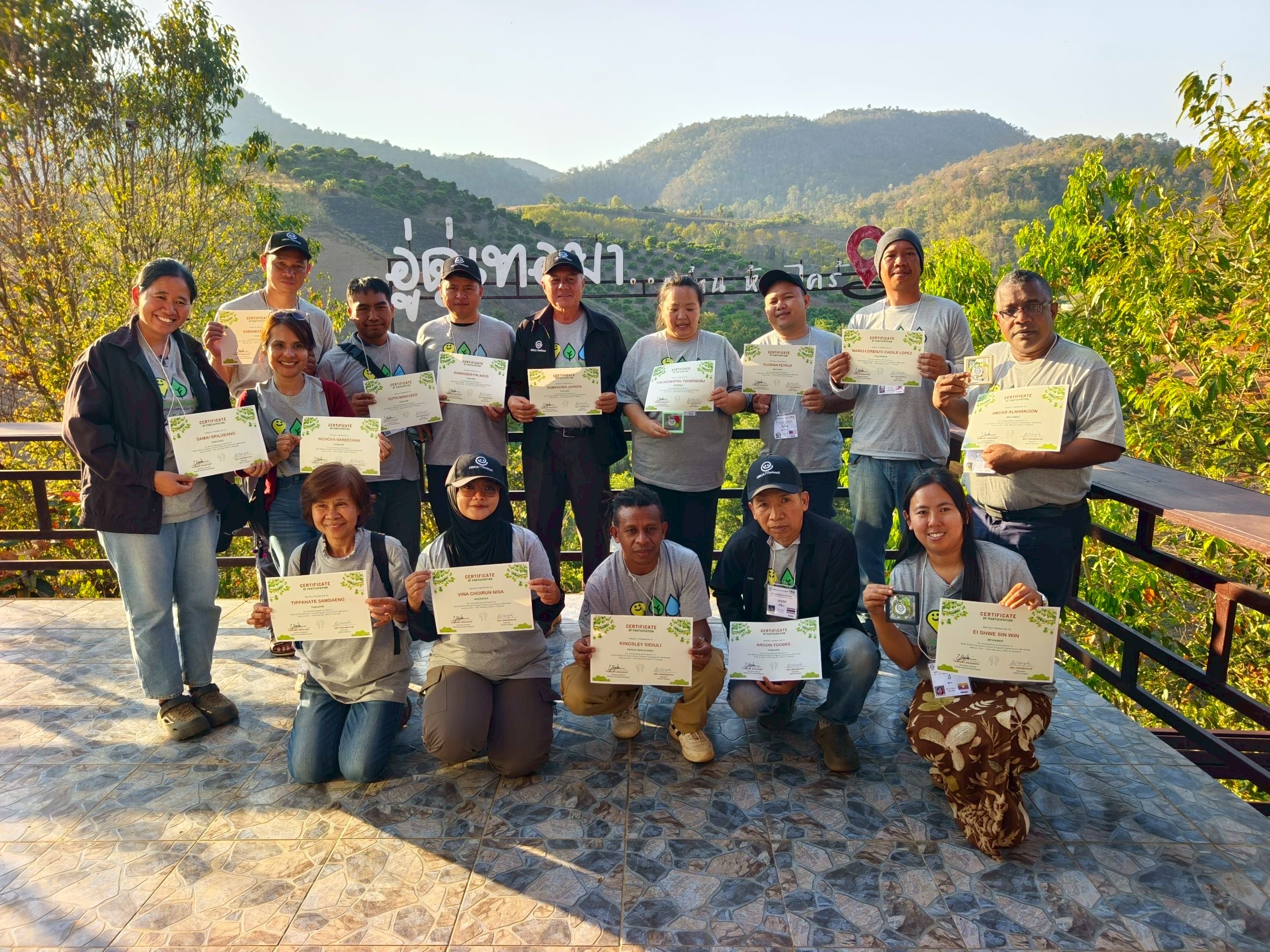
In mid-February, 2026, the International Coordinators Workshop of Children’s Forest Program (CFP) was held in Chiang Rai, Northern Thailand. At the event, 20 people from 9 countries of the Asia and Pacific region (Indonesia, Japan, Malaysia, Mongolia, Myanmar, Papua New Guinea, the Philippines, Sri Lanka, and Thailand) took part.
At this workshop, coordinators promoting the CFP in respective countries gathered to study models that balance environmental conservation with improved livelihoods, enhance their skills as coordinators, and exchange views on the status of activities and challenges in their respective countries. The major programs of the workshop are as follows:
- Presentation of Activities in each country
At the start of the workshop, an overview of activities in each country was presented. Reports were shared on various initiatives from different countries aimed at nurturing children’s hearts, such as organizing tree-planting events for parents and children, offering rice-farming experiences, and serving vegetables grown by the children in school lunches. At the same time, it was noted that despite differences between countries, they face common challenges such as the difficulty of securing tree-planting sites and waste management issues.
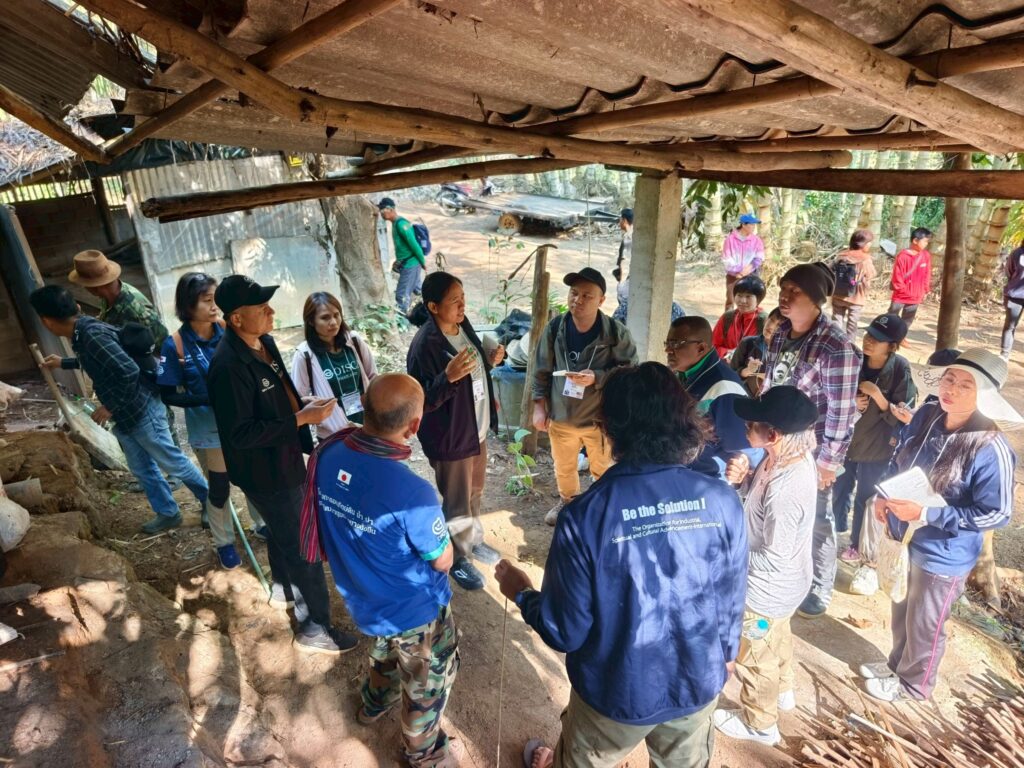
2.Tour of the Project Site (Pa Bong Village, Chiang Rai Province)
Our inspection of Pa Bong Village was a place where forest restoration efforts, which originally began with the CFP, have expanded to encompass the entire community.
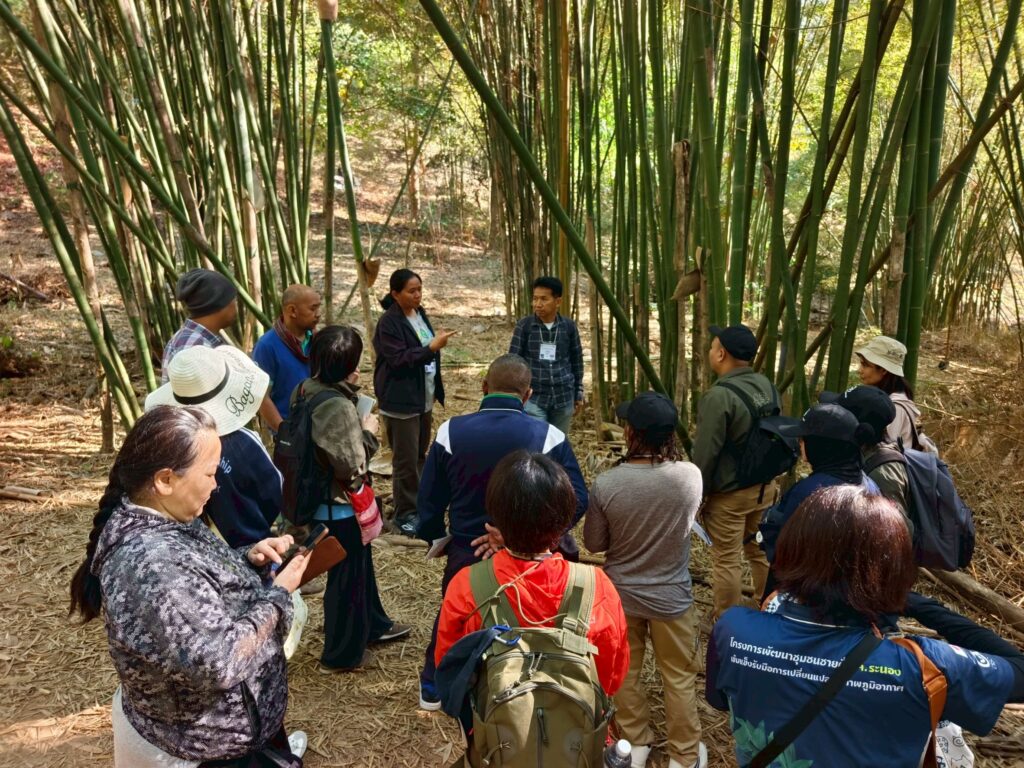
To make the most of that forest and achieve both forest conservation and improved livelihoods, a project was initially funded for three years by a grant for NGOs from Japan’s Ministry of Foreign Affairs. Today, the community is continuing the project on their own, and a wide variety of tree species have grown to maturity, creating a lush forest. The most surprising aspect of all is the versatile use of bamboo.
・Eating and Using: Planting approximately 50 varieties of bamboo. Harvesting bamboo shoots and using the bamboo for making poles and bamboo crafts.
・Utilizing: Creating bamboo charcoal for fuel.
・Returning: In the end, returning to the earth to nurture lush forests once again.
This “cycle” returns water resources to the village, nurturing fish, insects, and fertile soil. In the village, a “lifestyle in harmony with nature”—combining beekeeping with native bee species, fish farming, and the cultivation of wild mountain vegetables—is firmly established.
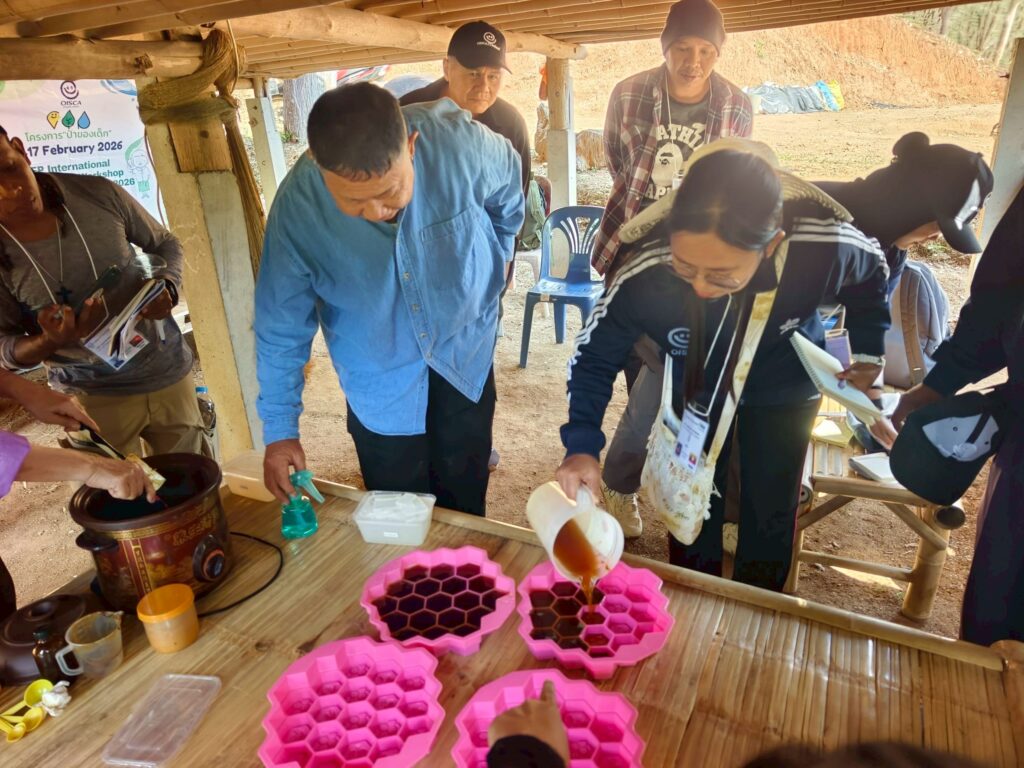
During the workshop, the participants experienced making honey soap using honey harvested from the beehives.
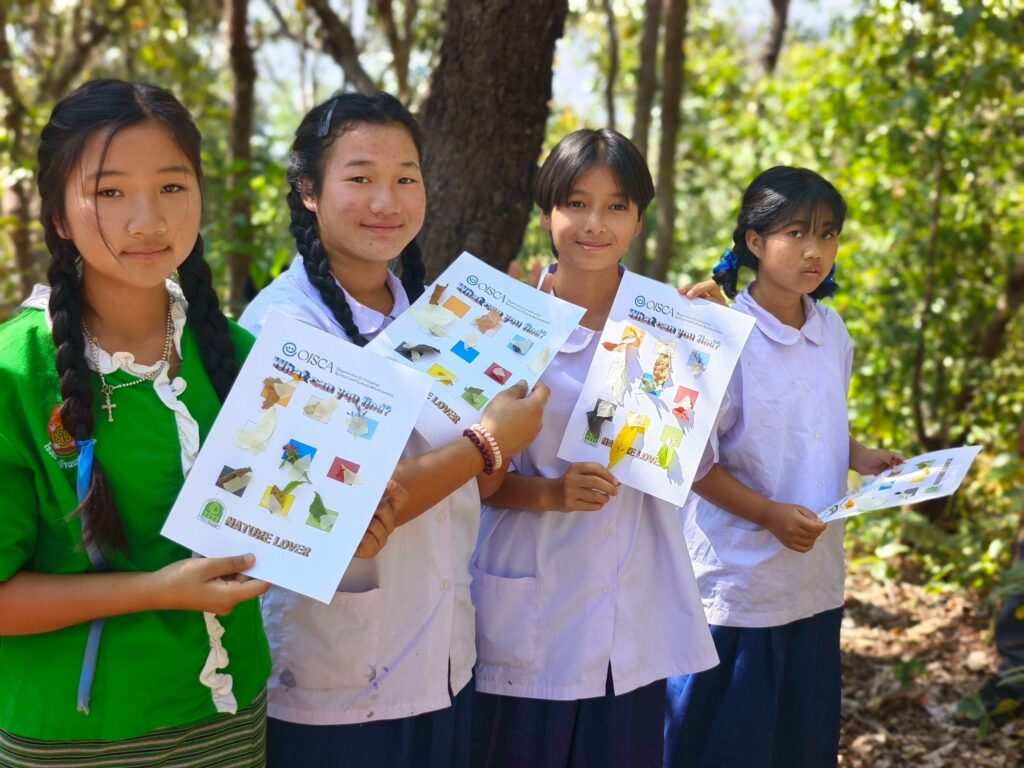
3.Nature Game’s Sharing Activities
Indonesian, Japanese and Papua New Guinean participants presented the activities putting into practice.
4.Message from OISCA Thailand
The Thai team also shared the philosophy essential to their approach to the project. They emphasized that “the protagonists are not OISCA, but the villagers,” and that fostering a sense of responsibility for protecting the forest among the local community is of the utmost importance.
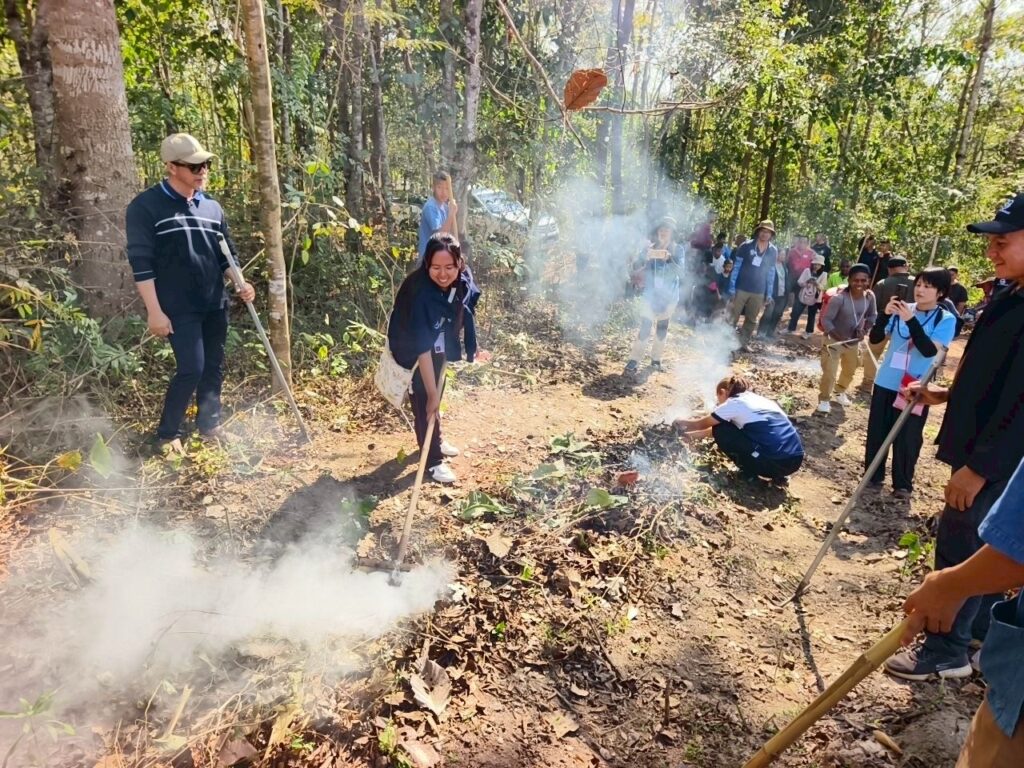
5.Creating Firebreaks
Representatives from the Forest Fire Prevention Bureau and 20 students from schools participating in the CFP program took part in a workshop on creating firebreaks.
6.Visits to schools participating in CFP (Ban Sanjerean Primary School and Ban Huaykrai Junior High School)
The workshop participants visited two schools and immediately put what they learned in the training into practice.
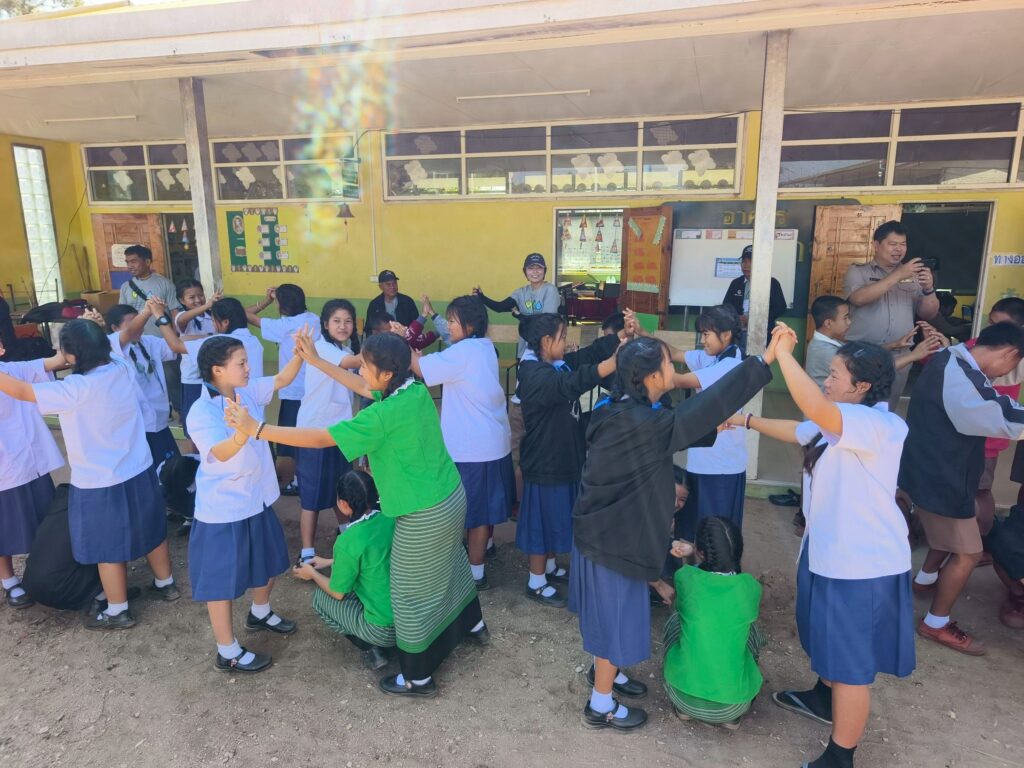
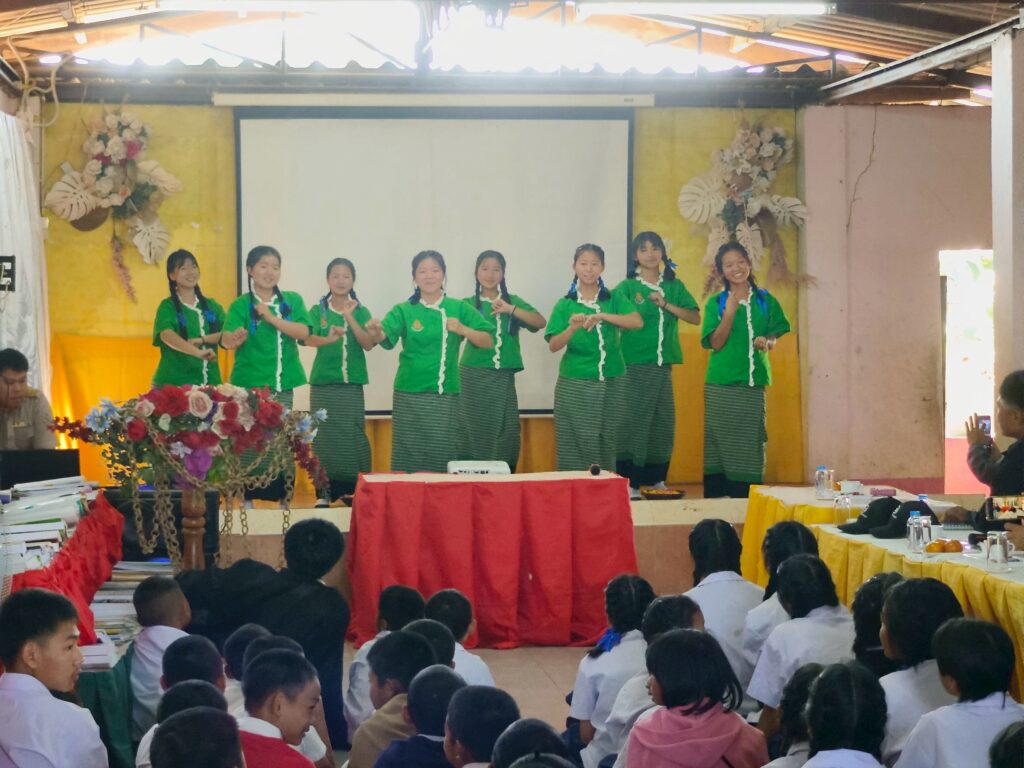
First, after enjoying a welcome dance performed by the school, the OISCA group also put on a dance performance, and the event kicked off in a warm and friendly atmosphere. On the day of the event, 49 students in grades 3 through 5 participated in the Nature Games.
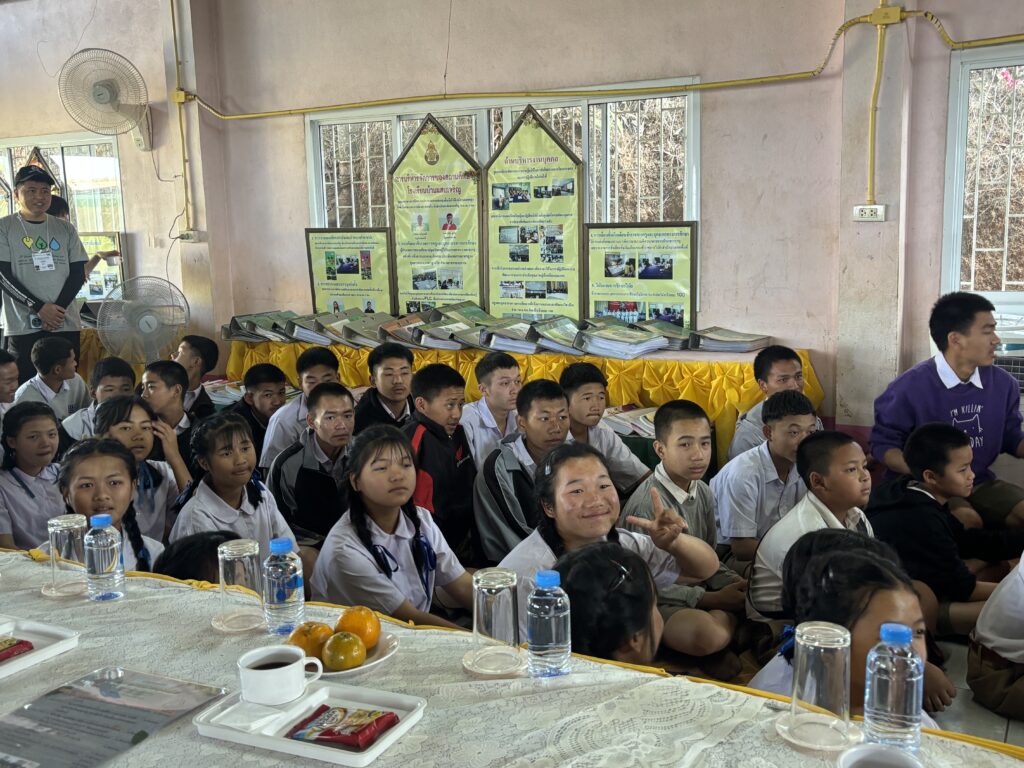
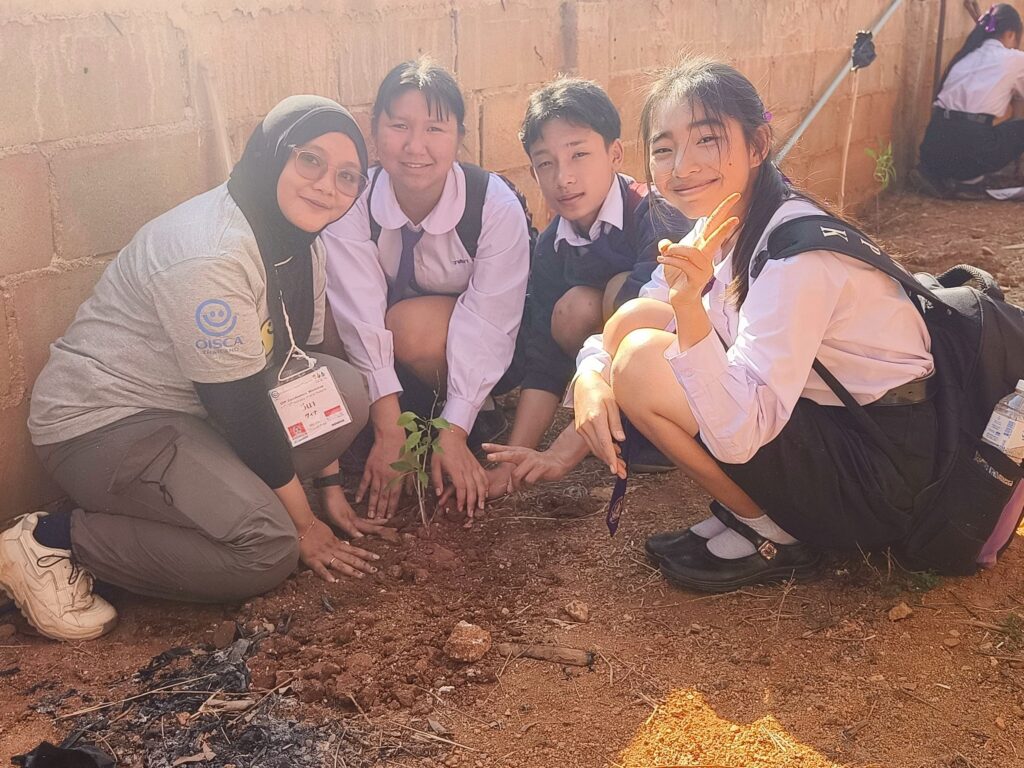
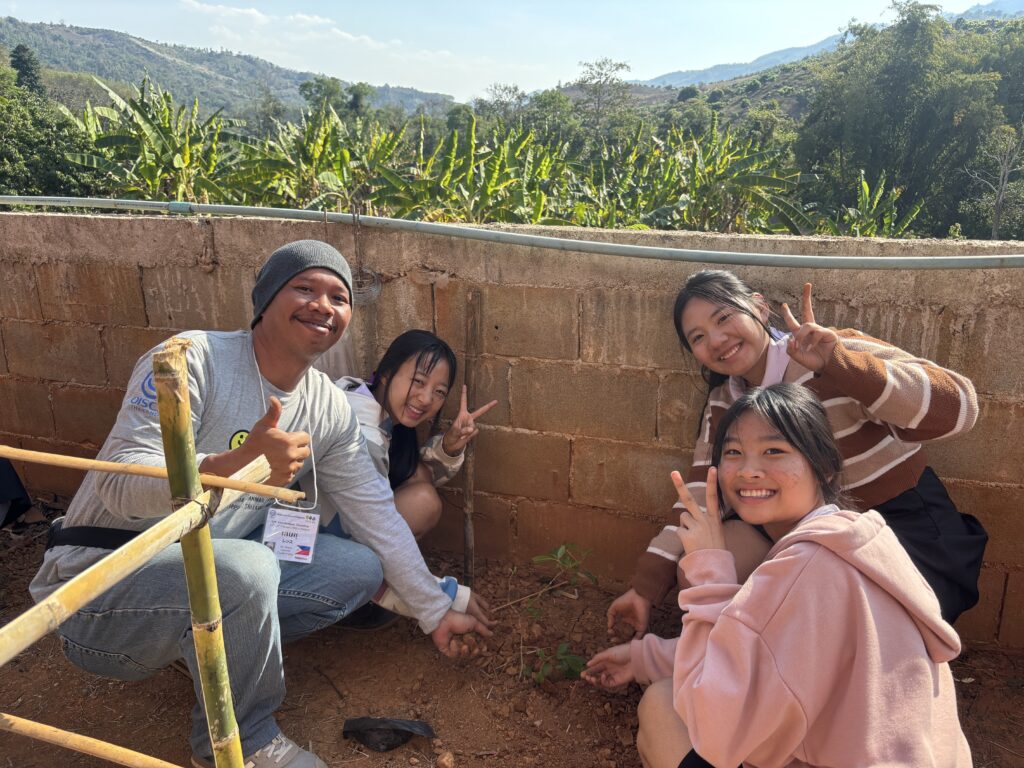
Next, the workshop group visited a junior high school participating in the CFP. Here, too, we began our interaction in a friendly atmosphere by dancing together. It was reported that they offer a program where students can learn the entire process, from planting coffee saplings—a local specialty—to brewing coffee. At the end of the activity, the workshop participants planted 20 Ginger Thomas-Yellow Bells together with the students.
7.Ceremony for Completion of Workshop
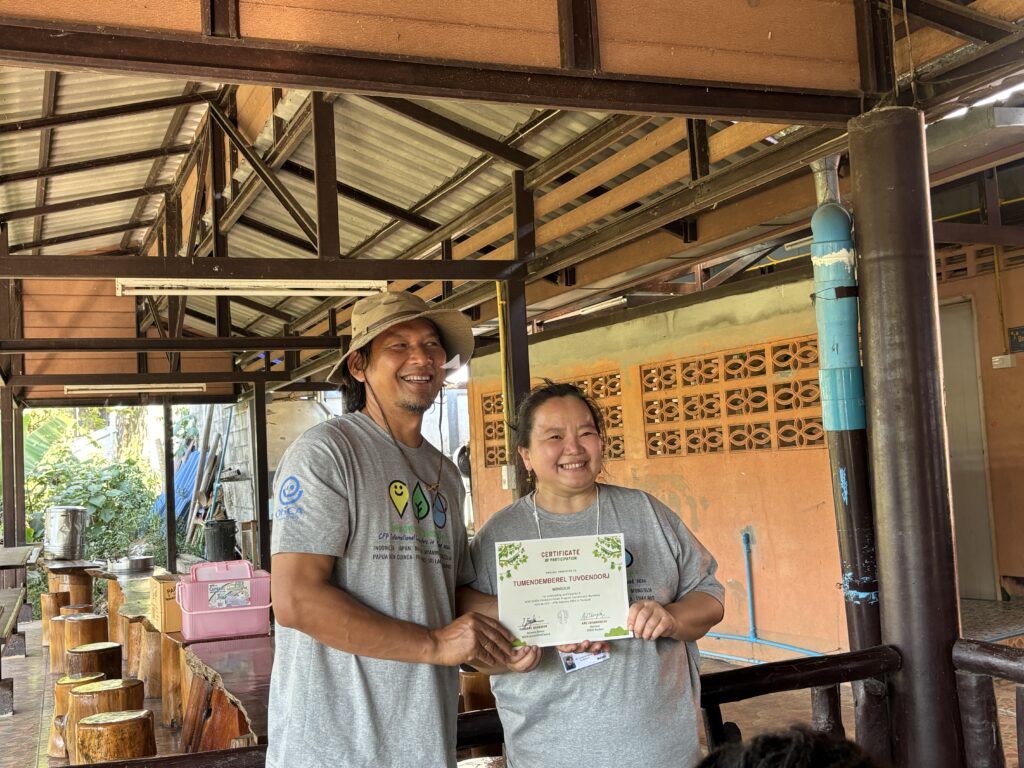
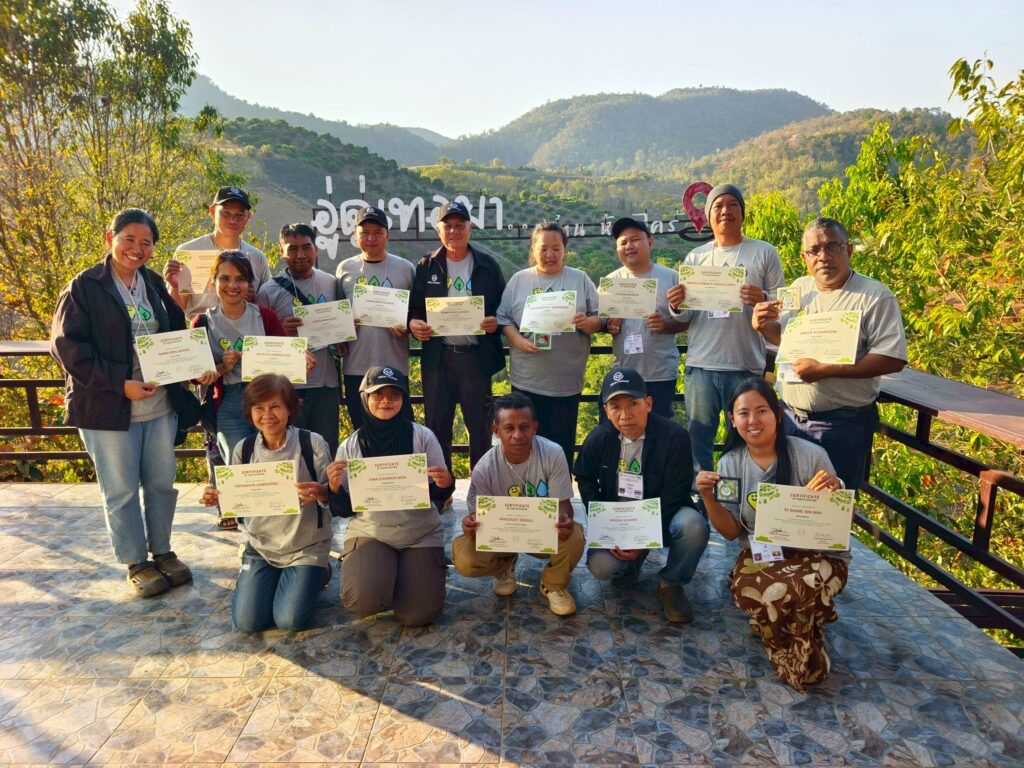
Mr. Prayaat from OISCA Thailand hand-delivered certificates of completion to each workshop participant.